The Rise of Educational Diversity in Hiring
Why Nontraditional Paths Are Winning Tech Jobs
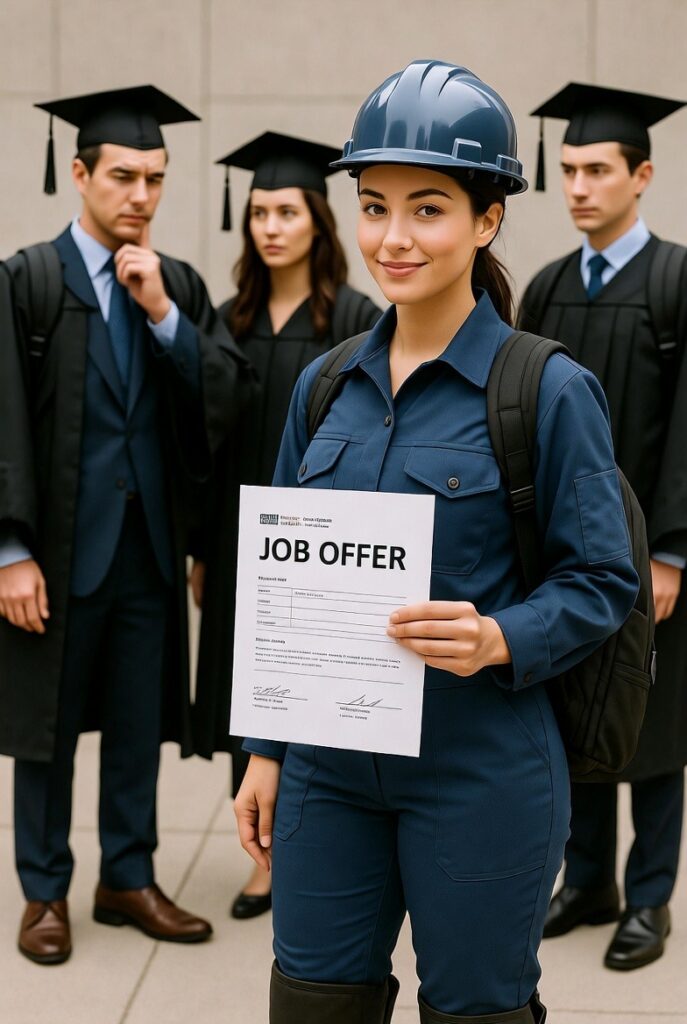
For decades, hiring in the tech sector followed a familiar script: elite universities, computer science degrees, and linear career paths. But as the pace of technological change accelerates—driven largely by AI, automation, and rapidly evolving software stacks—that script is being rewritten. A new hiring trend is emerging, one that actively rewards educational diversity in hiring, not just pedigree.
Employers are increasingly valuing candidates who have pursued intensive boot camps, accelerated certificate programs, and self-directed learning to gain in-demand STEM and AI skills. In many cases, these nontraditional candidates are competing head-to-head with, and sometimes outperforming, those with conventional four-year degrees and is key to educational diversity in hiring.
Why the Shift to Educational Diversity in Hiring is Happening Now
The high-tech job market is changing faster than academic institutions can adapt. University curricula often take years to update, while AI tools, programming frameworks, and data platforms can become obsolete in months. Boot camps and immersive training programs, by contrast, are built for speed. They focus narrowly on current tools, real-world use cases, and hands-on problem solving.
Companies facing talent shortages—especially in AI, data analytics, cybersecurity, and cloud engineering—can’t afford to wait for “perfect” resumes anymore and need to shift to educational diversity in hiring. They need people who can contribute quickly, learn continuously, and adapt under pressure. Candidates who voluntarily enroll in rigorous, time-intensive boot camps signal exactly that mindset.
From Credentials to Capabilities
This educational diversity in hiring trend reflects a broader move away from credential-based hiring toward skills-based hiring. Recruiters are placing more weight on demonstrable capabilities: portfolios, GitHub repositories, capstone projects, and real-world simulations. Someone who can show they’ve built a machine-learning model, automated workflows with AI tools, or shipped production-ready code often carries more weight than someone with an impressive degree but limited applied experience.
Boot camp graduates often stand out here. Their training is typically project-driven and collaborative, mirroring how modern engineering teams actually work. Many have also made deliberate career pivots—from marketing, finance, education, or the humanities—bringing valuable domain knowledge and communication skills along with their technical training.
Educational Diversity in Hiring as a Competitive Advantage
Forward-thinking companies are discovering that educational diversity strengthens teams. Employees who took nontraditional paths tend to approach problems differently, ask better questions, and bridge gaps between technical and nontechnical stakeholders. In AI-driven environments especially, this blend of technical fluency and human context is critical.
There’s also a resilience factor. Workers who have navigated career transitions and intensive retraining have already demonstrated adaptability—arguably the most important skill in a labor market defined by constant disruption.
What This Means for Job Seekers
For professionals watching roles shift or disappear due to automation, this trend offers a hopeful message: reinvention is not only possible, it’s increasingly valued. Strategic investments in boot camps or accelerated learning programs can be a credible—and respected—path into high-tech roles, especially when paired with strong portfolios and continuous learning.
What Educational Diversity in Hiring Means for Employers
Organizations that broaden their definition of “qualified” gain access to deeper, more diverse talent pools. By rewarding educational initiative rather than just formal credentials, they position themselves to keep pace with technological change—and to build teams that are both technically capable and creatively resilient.
In a world where technology evolves faster than degrees, the future of hiring belongs to those who recognize that how someone learned may matter less than how quickly they can learn again.
Here’s a helpful list of 5 well-known AI and STEM bootcamp or intensive training programs — including official websites where you can explore curriculum, formats, and enrollment. These programs are designed to help learners build in-demand AI, data science, and STEM skills:
AI & STEM Bootcamp Programs
- Springboard – AI & Machine Learning Career Track
A comprehensive online bootcamp covering machine learning, deep learning, and AI with mentorship and career support.
🌐 https://www.springboard.com/courses/ai-machine-learning-career-track/ - Le Wagon – Data Science & AI Bootcamp
Intensively trains students in data science, machine learning, and AI skills; available online or on campus in global locations.
🌐 https://www.lewagon.com/data-science-course - General Assembly – Data Science & AI Bootcamp
Offers immersive training in data science and related AI tools, focusing on real-world projects and career readiness.
🌐 https://generalassemb.ly/students/courses/data-science-bootcamp - AI Camp – AI Bootcamp & Programs
A learning community focused on building real AI products and skills, with online bootcamp tracks in AI tools and product development.
🌐 https://www.ai-camp.org/ - Metis – Data Science & AI Bootcamp
Offers a structured AI and data science bootcamp in full-time or part-time formats aimed at career-focused learners.
🌐 https://www.institutedata.com/us/ds-metis-data-science-bootcamp/
Stemta Corporation – February 3 2026


Responses